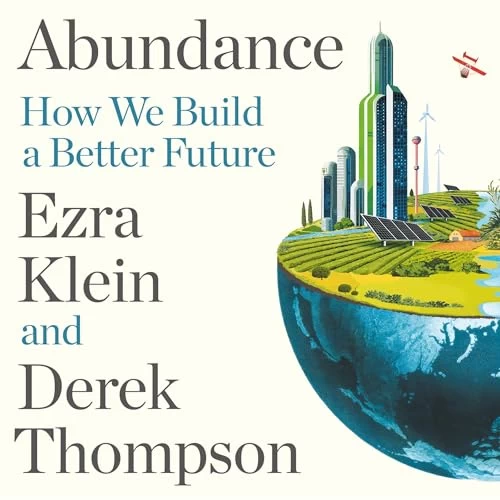
Abundance: How We Build a Better Future
[book] by Ezra Klein and Derek Thompson
This book has influenced the Australian government's thinking.
Significance
Treasurer Jim Chalmers has spruiked Abundance to his colleagues and Andrew Leigh gave a speech "The Abundance Agenda" based on the ideas in the book.
While the authors are from the US, many of the arguments made are relevant to Australia.
Plenty of evidence Jim Chalmers is keen to promote "abundance" thinking, e.g. the productivity push.
Main points
- Productivity in housing is down compared to the 1990s - they argue because of overregulation
- Building things like high speed rail is expensive and glacial - once agian because there are so many regulatory hurdles, exspecially environmental ones
- Governments cannot get things done any more, adding to the loss in trust.
- If the private sector builds housing, it's cheaper and quicker than if government does so.
- The huge changes needed for the clean energy transition aren't happening in both countries because of regulations set up many decades ago.
- Takes too long to approve new renewable energy projects
- The "problems" started in the 1960s and 70s when:
- Rachel Carson's Silent Spring was published
- Ralph Nader became active in promoting safety and environmental regulations.
- Earth Day
- EPA, Clean Air Act, National Environment Policy Act, Endangered Species Act, Toxic Substances Control Act
- Similar legislation was introduced throughout the Western world
- Klein and Thompson say liberals are more concerned with blocking bad development than they are in promoting and supporting good development. They say Democrats focus on the process rather than outcomes.
- The right is allergic to government intervention, so the US is stuck between these 2 forces.
Their solution - an "abundance" agenda
- Supply-side progressivism. That is, increase the supply of essential goods and services to make them affordable in order to achieve progressive outcomes.
- Reduce regulations that restrict supply
- Grew out of experiences during COVID when supplies ran out and most countries weren't nimble enough to ramp up production
- Need to build state capacity - strengthen civil service tp plan goverment projects
- Encourage innovation
- Important for applications in housing, healthcare, energy, transportation
- Argue for removing powers of activists to block new housing and energy infrastructure
Critique includes
- Just neo-liberalism with another name
- Tramples on hard-wom environmental legislation
- Tramples on right to protest
- There's plenty of evidence of the "abundance" approach in Asia, where governments tend to have 5- and 10-year plans, which on the whole are implemented, whether the populace - or the environment - likes it or not. But housing, hospitals, transport infrastructure do get successfully built.
- Perhaps this is indicative of the breakdown of the "infinite growth on a finite planet" situation, where nothing gets done?
Examples in Gold Coast
- Arundel hills development: ultimately lost because LNP now in power
- Light rail extension to the airport - local objections
- Springbook Cableway
Possible GCV action
- When arguing for better environmental outcomes, be aware of unintended consequences.
- Be aware of loss of rights to protest
Posted by Murray. Last modified: 11 Jul 2026.